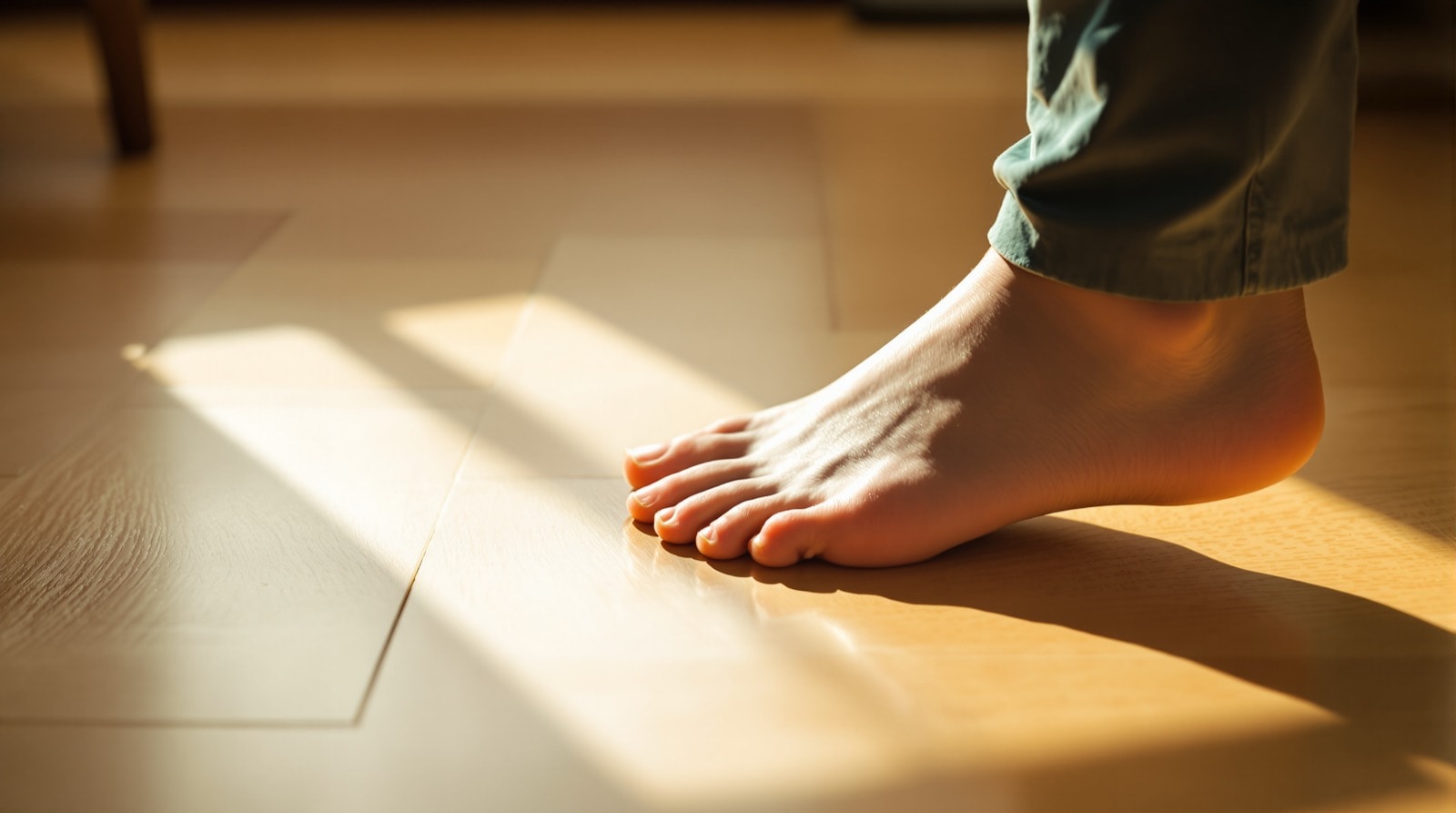
What plantar fasciitis is
The plantar fascia is a thick band of connective tissue running from the underside of the heel bone forward to the base of the toes. It supports the arch and acts as a tensioning cable, tightening as the foot rolls forward over the toes in the propulsive phase of walking. Plantar heel pain arises where that tissue attaches to the heel bone.
The name is slightly misleading. The suffix "-itis" implies inflammation, and the tissue changes seen in longstanding cases are more degenerative than inflammatory — disorganised collagen and micro-tearing rather than an inflamed structure. This is why the terms plantar fasciosis, plantar fasciopathy or simply plantar heel pain are increasingly preferred, and why anti-inflammatory approaches alone tend to disappoint. The StatPearls review of plantar fasciitis covers the underlying pathology, and OrthoInfo's summary of plantar fasciitis and bone spurs gives the patient-level account.
Why the morning pattern happens
During sleep the foot rests in a plantarflexed position and the fascia shortens and settles. The first weight-bearing steps abruptly load and stretch it, which is felt as a sharp pain at the attachment. After a few minutes of walking the tissue accommodates and the pain eases — until the next period of rest resets it. That characteristic pattern is diagnostically useful, and its absence is a reason to consider other causes.
Contributing factors
- A sudden increase in load — a new job on the feet, a return to running, a holiday of long walking days, a move to a house with more stairs.
- Tight calf muscles and a restricted ankle, which increase tension through the fascia at every step. This is one of the most consistent findings.
- Footwear with no support or a completely flat, hard sole, and long periods barefoot on hard floors.
- Increased body weight, which raises the load through the tissue at every step.
- Foot type — both very flat and very high-arched feet appear more frequently than expected, for different mechanical reasons.
- Prolonged standing on hard surfaces, particularly in unsupportive work footwear.
The heel spur is usually a bystander
This is worth stating plainly because it causes a great deal of unnecessary alarm. A heel spur is a small bony outgrowth on the underside of the heel bone, visible on X-ray. Spurs are common in people with no heel pain at all, and many people with severe plantar heel pain have no spur. The spur is generally a marker of long-standing traction at the attachment rather than the thing causing the pain, and it grows within the tissue rather than sticking into the foot as the word suggests. Treatment is directed at the fascia, not at the spur, and surgery to remove a spur is rarely the answer to this problem.
What else can cause heel pain
Distinguishing these is a clinical job, but knowing they exist matters, because treating everything as plantar fasciitis is how people spend a year not getting better.
- Calcaneal stress fracture — deeper, more diffuse pain, tender when the heel is squeezed from both sides, typically after a sharp increase in running or in someone with reduced bone density. Does not follow the first-step pattern.
- Fat pad atrophy — thinning of the natural heel cushion, more common with age, producing a deep bruised ache in the centre of the heel.
- Nerve entrapment — burning, tingling or radiating pain rather than sharp mechanical pain; a compressed nerve branch near the heel can mimic fasciitis closely.
- Achilles or insertional problems — pain at the back of the heel rather than underneath.
- Inflammatory arthritis — heel pain in both feet, particularly in a younger adult, with morning stiffness elsewhere, warrants a rheumatological view.
What actually helps
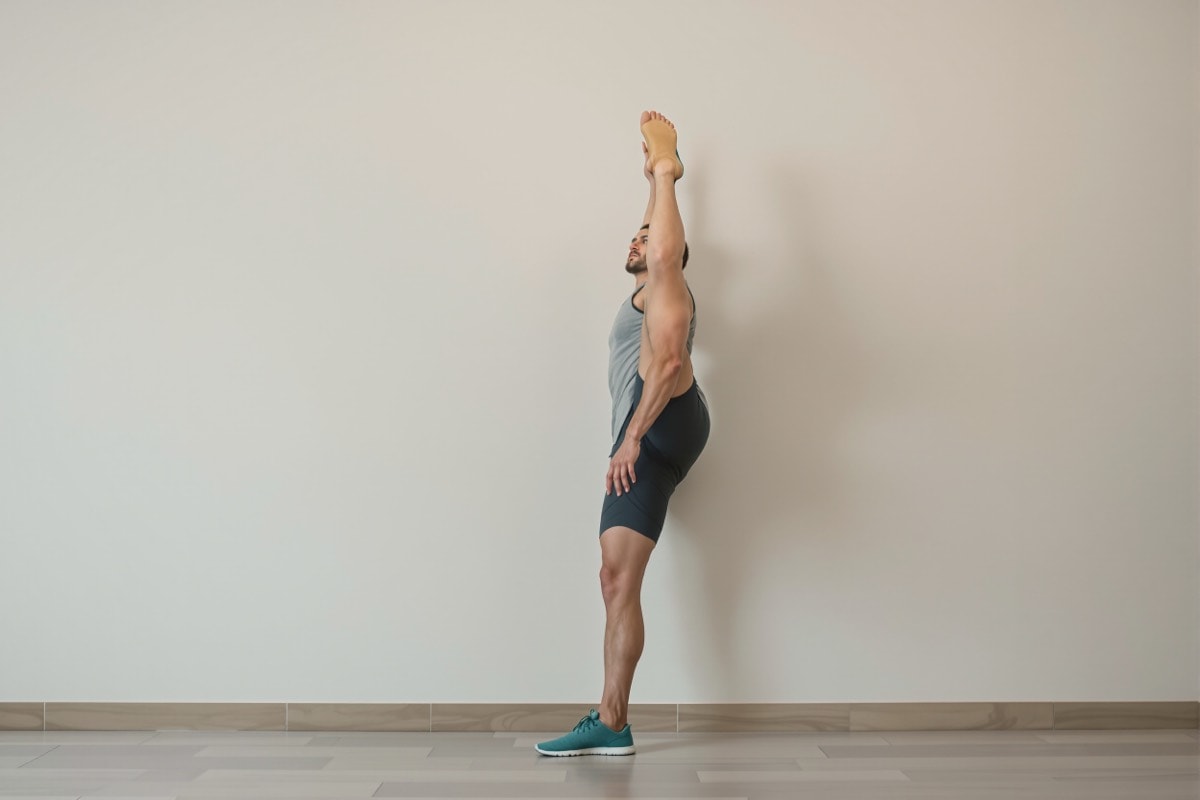
Calf and fascia stretching. The most consistently supported self-management measure. A standing calf stretch against a wall, held for around thirty seconds and repeated, several times a day; plus a plantar fascia specific stretch performed before the first steps of the morning, pulling the toes back with the hand while seated. Doing that stretch before standing up, rather than after, is the detail most people miss.
Progressive loading. Slow, heavy calf and foot strengthening — heel raises performed with the toes elevated on a rolled towel, progressed gradually — has good support and is now central to management rather than an afterthought.
Load management. Reducing, not eliminating, the aggravating activity. Complete rest tends to deconditions the tissue and the problem returns on resumption.
Footwear. A shoe with a supportive midsole and a modest heel-to-toe drop, worn indoors as well as out. Going barefoot on hard floors at home is a common and easily fixed aggravator.
Orthoses. Both prefabricated and custom devices help a proportion of people, with trials showing broadly comparable results for this condition — which argues for trying a good off-the-shelf device first. See foot orthoses.
Ice and simple analgesia for symptom relief, rolling the sole over a chilled bottle being the usual method.
Night splints hold the foot in a neutral position overnight so the tissue is not shortened by morning. Effective for some, poorly tolerated by others.
What comes later
If a properly executed programme has not worked over several months, other options exist — corticosteroid injection, which gives short-term relief but carries a risk of fascia rupture and fat pad changes and is not a first-line answer; extracorporeal shockwave therapy, which has reasonable support in recalcitrant cases; and surgery, which is uncommon and reserved for a small minority.
Expectations, honestly
Plantar heel pain resolves in the large majority of people, but slowly — improvement is measured in months, and six to twelve months is a common course even with good management. The most frequent reason for apparent failure is not the wrong treatment but insufficient time and inconsistent execution. That said, if pain is severe, if it is present at rest or at night, if there is numbness, or if there is no progress at all over several months, go back rather than persevering; those features point away from the usual diagnosis.
See also flatfoot and foot posture, and when a foot problem needs professional care.